ESD Requirements
This section describes the ESD requirements. Ensure that the equipment room meets these requirements because static electricity may damage the USG components and cause the USG to malfunction.
The absolute value of the static voltage must be less than 1000
V. To meet the requirement, take the following measures in the equipment
room:
- Provide operators with ESD protection training.
- Adjust the humidity to reduce the impact of static electricity.
- Install an ESD floor in the equipment room.
- Wear an antistatic suit, ESD gloves, and antistatic shoes before entering the equipment room.
- Use ESD tools, such as ESD wrist straps, ESD tweezers, and extractors.
- All the conductors in the equipment room, including computer terminals, must be properly grounded. Set up an antistatic workbench.
- Electrostatic sources, such as non-ESD plastic bags, non-ESD foam, and rubber objects must be kept at least 30 cm away from ESD-sensitive components and boards.
To protect the USG boards
from damage caused by static electricity discharge, take the following
measures:
- Ensure that the USG is properly grounded according to the grounding requirements.
- Wear an ESD wrist strap before performing any operations on the USG.
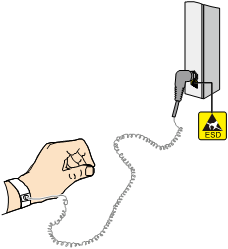
- Ensure proper contact between the metal buckle of the ESD wrist strap and the operator's skin. Ensure that the other end of the ESD wrist strap is already connected to the ESD jack on the USG, as shown in Figure 1. In addition, wearing ESD gloves is recommended.
- Ensure that the ESD wrist strap works properly and its resistance ranges from 0.75 Mohm to 10 Mohm. Generally, the service life of an ESD wrist strap is two years. If the ESD wrist strap resistance does not meet the requirement within its service life, replace it with a new one.
- Avoid contact between the boards and clothes because the ESD wrist strap cannot protect operators from the static electricity caused by this type of contact.
- Use an anti-static pad when replacing boards or chips. In addition to wearing the ESD wrist strap, use ESD tweezers and extractors when inserting and removing boards and chips. Do not touch chips and their pins with bare hands.
- Keep all boards and components in ESD bags until they are to be installed. Place temporarily demounted boards and components on the anti-static pad or other effective antistatic materials. Do not use non-ESD materials, such as foam, plastic bags, and paper bags to wrap or make contact with the boards.
- Wear an ESD wrist strap before working on board terminals. Discharge cables and terminal protection jackets using either contact discharge or air discharge before connecting them to device terminals.
- Save board packing materials, such as plastic boxes and ESD bags, for future use.