Applying Port Pre-Allocation and Incremental Allocation to the DS-Lite Scenario
This section describes how to apply port pre-allocation and incremental allocation to the DS-Lite scenario.
The carrier MAN is an IPv6 network with many IPv4 services to be developed. Port pre-allocation and incremental allocation can assign port ranges to the CPE in advance, reduce the log volume, and facilitate user address tracing.
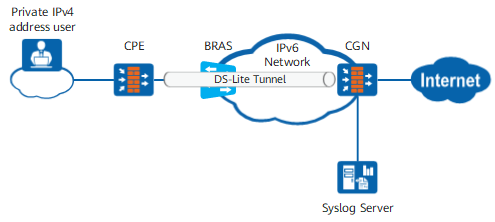
Figure 1 shows the application of port pre-allocation and incremental allocation in the DS-Lite scenario. In this scenario:
The CPE serves as a user access device to allocate private IPv4 addresses to users.
The BRAS functions as the access-layer device on the MAN. Generally having a built-in DHCP server module, the BRAS cooperates with the AAA server as a RADIUS client to implement CPE authentication and address allocation. In the DS-Lite scenario, the BRAS device allocates IPv6 addresses to CPEs. The CPEs use these addresses as source addresses to set up DS-Lite tunnels with the CGN device.
As the traffic convergence point, the CGN device needs to set up the DS-Lite tunnel with CPEs and decapsulates packets received at the tunnel interface. In additions, the CGN device allocates public port ranges to CPEs and performs NAT on decapsulated service packets.
The syslog server interworking with the CGN device analyzes and resolves the logs from the CGN device to trace the addresses of the CPEs.