Overview of PoE
With the rapid development of new services such as WLAN, VoIP, and network video surveillance, terminals such as wireless APs, IP phones, and network cameras are widely used. Many of these types of electrified terminals often need to be installed on places where power supplies are difficult to deploy, such as high ceilings and outdoors. PoE power supply avoids power supply installation and cabling and enables terminals to automatically obtain power when accessing networks.
- PoE originally complied with IEEE 802.3af and provided the maximum power of 15.4 W. It can effectively meet the requirement of centralized power supply for terminals such as IP phones, wireless APs, portable device chargers, card readers, cameras, and data collectors.
- PoE+ is an enhanced PoE version. It complies with IEEE 802.3at and provides the maximum power of 30 W. It can supply power to terminals such as video phones and video surveillance systems.
- Reliable: PoE provides centralized power supply.
- Simple connection: Network terminals do not need external power supplies. Instead, they only need a network cable.
- General standards: PoE complies with IEEE 802.3af and IEEE 802.3at standards and uses global power interfaces for interconnection with devices produced by different vendors.
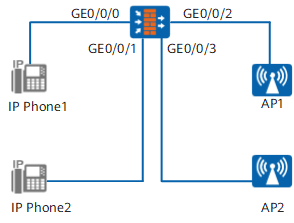
To meet the requirements of using the FW for security defense and power supply for terminals, the FW supports PoE, as shown in Figure 1. Through power supply interfaces, PoE directly supplies power to access devices (such as IP phones and surveillance cameras) without connecting to external power supplies, which reduces costs.