OSPFv3 LSA Format
Each router in an autonomous system (AS) generates one or more types of link state advertisements (LSAs), depending on the router's type. Multiple LSAs form a link state database (LSDB). Open Shortest Path First (OSPF) for IPv6 encapsulates routing information into LSAs for transmission. Commonly used LSAs include:
LSA Header Format
All LSAs have the same header. Figure 1 shows an LSA header.
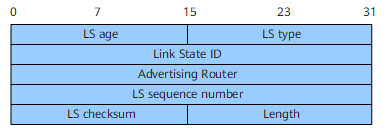
Table 1 describes LSA header fields.
Field |
Length |
Description |
|---|---|---|
LS age |
16 bits |
Time that elapses after the LSA is generated, in seconds. The value of this field continually increases regardless of whether the LSA is transmitted over a link or saved in an LSDB. |
LS type |
16 bits |
Type of the LSA. The values are as follows:
|
Link State ID |
32 bits |
This field together with the LS type field describes an LSA in an AS. |
Advertising Router |
32 bits |
Router ID of the router that generates the LSA. |
LS sequence number |
32 bits |
Sequence number of the LSA. Neighbors can use this field to identify the latest LSA. |
LS checksum |
16 bits |
Checksum of all fields except the LS age field. |
Length |
16 bits |
Length of the LSA including the LSA header, in bytes. |
Router-LSA
A router-LSA describes the link status and cost of a router. Router-LSAs are generated by a router and advertised within the area to which the router belongs. Figure 2 shows the format of a router-LSA.
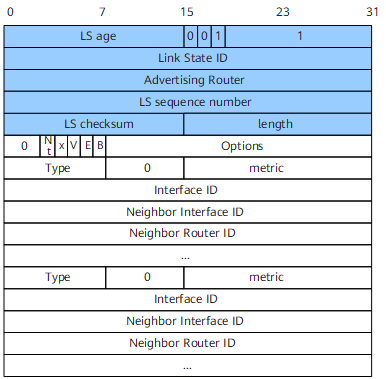
Table 2 describes router-LSA fields.
Field |
Length |
Description |
|---|---|---|
Nt (NSSA translation) |
1 bit |
If the router that generates the LSA is an NSSA border router, this field is set to 1. In other cases, this field is set to 0. When this field is set to 1, the router is unconditionally translating NSSA-LSAs into AS-external-LSAs. |
x |
1 bit |
This field is deprecated. |
V (Virtual Link) |
1 bit |
If the router that generates the LSA is located at one end of a virtual link, this field is set to 1. In other cases, this field is set to 0. |
E (External) |
1 bit |
If the router that generates the LSA is an autonomous system boundary router (ASBR), this field is set to 1. In other cases, this field is set to 0. |
B (Border) |
1 bit |
If the router that generates the LSA is an area border router (ABR), this field is set to 1. In other cases, this field is set to 0. |
Options |
24 bits |
The optional capabilities supported by the router. |
Type |
8 bits |
Type of the router link. The values are as follows:
|
metric |
16 bits |
Cost of the link. |
Interface ID |
32 bits |
The Interface ID assigned to the interface. |
Neighbor Interface ID |
32 bits |
The Interface ID the neighbor router has associated with the link. |
Neighbor Router ID |
32 bits |
The Router ID of the neighbor router. |
Network-LSA
A network-LSA describes the link status of all routers on the local network segment. Network-LSAs are generated by a DR on a broadcast or non-broadcast multiple access (NBMA) network and advertised within the area to which the DR belongs. Figure 3 shows the format of a network-LSA.
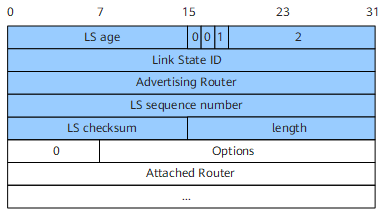
Table 3 describes network-LSA fields.
Inter-Area-Prefix-LSA
An inter-area-prefix-LSA describes routes on a network segment in an area. It is generated by the ABR. The routes are advertised to other areas.
Figure 4 shows the format of an inter-area-prefix-LSA.
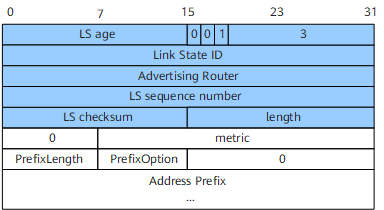
Table 4 describes inter-area-prefix-LSA fields.
Inter-Area-Router-LSA
An inter-area-router-LSA describes routes to ASBR in other areas. It is generated by the ABR. The routes are advertised to all related areas except the area that the ASBR belongs to.
Figure 5 shows the format of an inter-area-prefix-LSA.
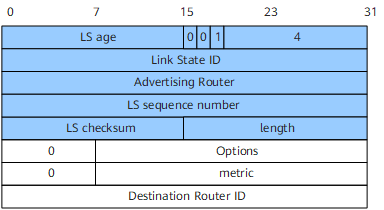
Table 5 describes inter-area-router-LSA fields.
AS-External-LSAs
An as-external-LSA describes destinations outside the AS, it is originated by ASBR.
Figure 6 shows the format of an as-external-LSA.
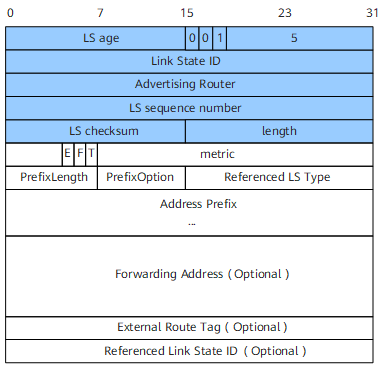
Table 6 describes as-external-LSA fields.
Field |
Length |
Description |
|---|---|---|
E |
1 bit |
The type of external metric.
|
F |
1 bit |
Whether a Forwarding Address has been included in the LSA.
|
T |
1 bit |
Whether an External Route Tag has been included in the LSA.
|
Referenced LS Type |
16 bits |
Indicates the referenced LS type. If non-zero, an LSA with this LS type is to be associated with this LSA (see Referenced Link State ID below). |
Forwarding Address |
128 bits |
A fully qualified global IPv6 address. |
External Route Tag |
32 bits |
Indicates the external route tag, which can be used to communicate additional information between ASBRs. |
Referenced Link State ID |
32 bits |
Indicates the referenced link state ID. |
NSSA-LSAs
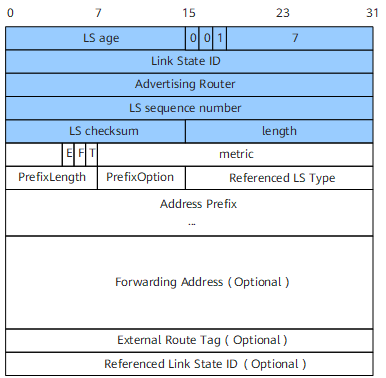
An NSSA-LSA describes destinations outside the AS, it is originated by ASBR.
Figure 7 shows the format of an NSSA-LSA.
Link-LSAs
Each router generates a link LSA for each link. A link LSA describes the link-local address and IPv6 address prefix associated with the link and the link option set in the network LSA. It is transmitted only on the link.
Figure 8 shows the format of a Link-LSA.
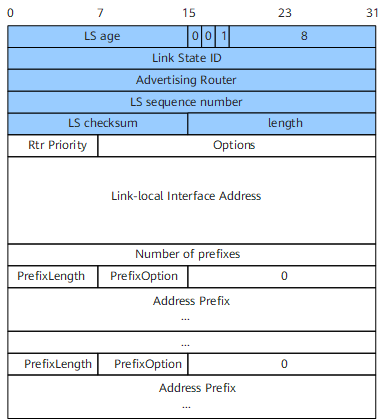
Table 7 describes link-LSA fields.
Field |
Length |
Description |
|---|---|---|
Rtr Priority |
8 bits |
The Router Priority of the interface. |
Options |
24 bits |
The set of Options bits that the router would like set in the network-LSA that will be originated by the DR on broadcast or NBMA links. |
Link-local Interface Address |
128 bits |
The originating router's link-local interface address on the link. |
Number of prefixes |
32 bits |
The number of IPv6 address prefixes contained in the LSA. |
Intra-Area-Prefix-LSAs
- An LSA generated on a router describes the IPv6 address prefix associated with the router LSA.
- An LSA generated on a DR describes the IPv6 address prefix associated with the network LSA.
Figure 9 shows the format of an intra-area-prefix-LSA.
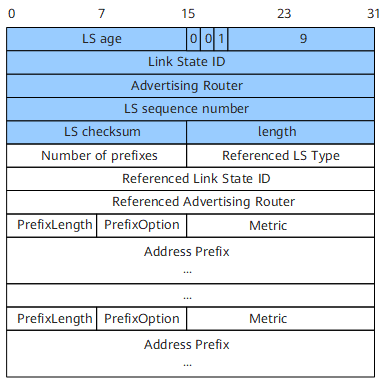
Table 8 describes intra-area-prefix-LSA fields.
Field |
Length |
Description |
|---|---|---|
Referenced LS Type |
16 bits |
This field identifies the router-LSA or network-LSA with which the IPv6 address prefixes should be associated.
|
Referenced Link State ID |
32 bits |
Indicates the referenced link state ID.
|
Referenced Advertising Router |
32 bits |
Indicates the ID of the referenced advertising router.
|